A Cultural Week in Armenia
Armenia's great monuments, museums and towns in one week, at an easy pace and in any season.
- 7 days
- Easy
- All year
Price on request
View tour
The memorial and museum on Tsitsernakaberd hill, above the Hrazdan gorge.
Written by Wild Armenia guides · Last verified 2026-11-03
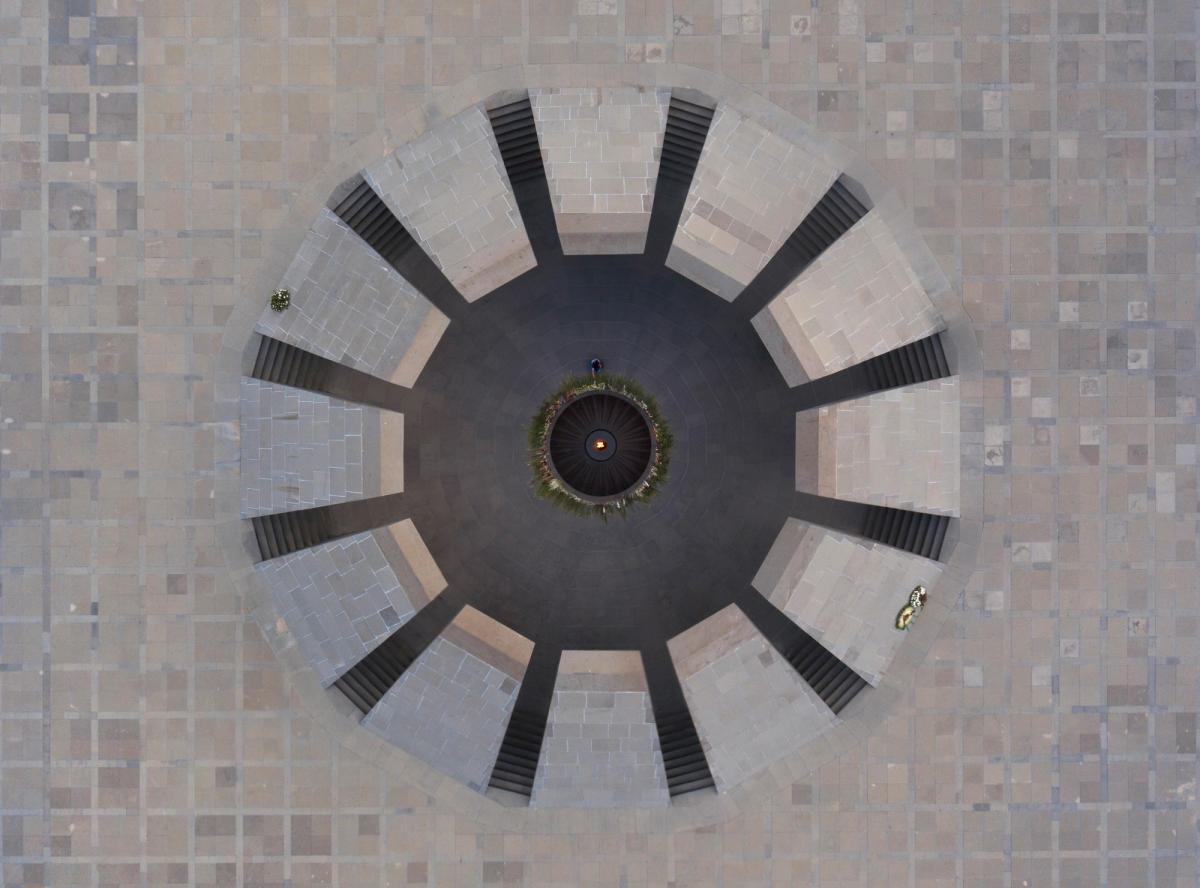
On a hill above the Hrazdan gorge, the Tsitsernakaberd memorial honours the victims of the Armenian Genocide of 1915. A ring of twelve basalt slabs leans toward an eternal flame, and beside it a tall stele rises toward the sky. Visitors walk slowly, lay flowers and stand in silence.
The museum-institute beside the memorial tells the story with documents, photographs and testimony. It is a quiet and serious place, and a visit is one of the most important ways to understand modern Armenia and its memory.
Armenia's great monuments, museums and towns in one week, at an easy pace and in any season.
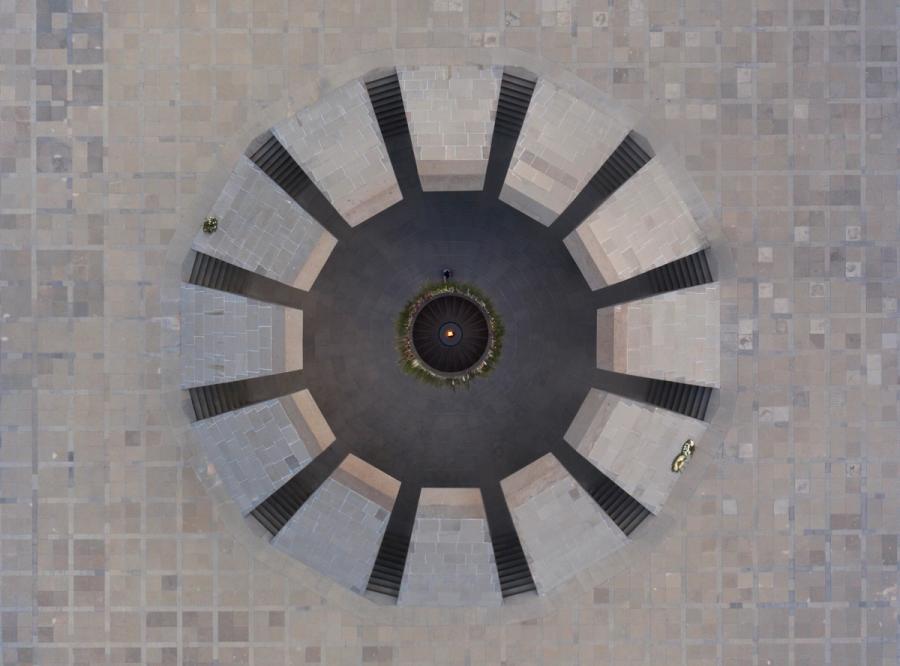
Completed in 1967 by the architects Arthur Tarkhanyan and Sashur Kalashyan, the memorial has two parts. Twelve basalt slabs form a circle around the eternal flame, one for each lost province, and a stele 44 metres high rises beside it. On 24 April, the day of remembrance, many thousands of people come to lay flowers.
The museum opened in 1995, on the 80th anniversary, and was later expanded. Its halls follow the history from the late Ottoman period through 1915 and its aftermath, using documents, maps, photographs and testimonies. The research institute continues the study of the events.
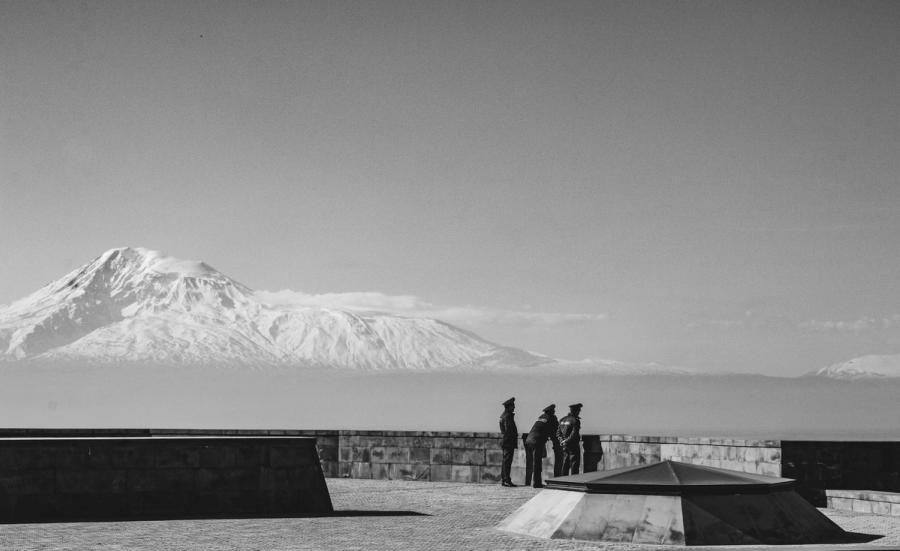
From the hill you can see the Hrazdan gorge, the city below and, on clear days, Mount Ararat across the plain. Many visitors take a few quiet minutes at the railing after the museum.
Photos: Aleksey Chalabyan (a.k.a. Xelgen), CC BY-SA 4.0 · Matthias Süßen, CC BY-SA 4.0
The Armenian Genocide began in 1915, when hundreds of thousands of Armenians were killed or deported from the Ottoman Empire. For decades the memory was kept privately. In 1965, the 50th anniversary, mass demonstrations in Yerevan led the Soviet authorities to approve a memorial, which was completed in 1967. The museum-institute opened in 1995. Armenians around the world commemorate the victims each year on 24 April.
| When | What happened |
|---|---|
| 1915 | The Armenian Genocide begins |
| 1967 | The memorial is completed |
| 1995 | The museum-institute opens |
24 April is the day of remembrance, with large crowds.
Visit on another day for quiet
Hot; come in the morning.
Best in the morning
Comfortable and clear.
Best overall
Cold; dress warmly for the outdoor memorial.
For quiet visits
The complex is on a single hill; the memorial and museum are a few minutes' walk apart.
Stay in the centre; the memorial is a short taxi ride away.
There are few places to eat on the hill. Plan lunch in the city centre afterwards.
Visit the memorial and museum in the morning and spend the afternoon at the Cascade and Republic Square.
On Tsitsernakaberd hill in Yerevan, above the Hrazdan gorge.
The memorial was completed in 1967 and the museum-institute opened in 1995.
They form a circle around the eternal flame, one for each lost province.
The day of remembrance, when thousands lay flowers at the memorial.
About 1.5 to 2 hours for the memorial and museum.
Get seasonal tips, new routes and ideas for your next trip to Armenia.
Thank you. We will be in touch soon.