
A Cultural Week in Armenia
Armenia's great monuments, museums and towns in one week, at an easy pace and in any season.
- 7 days
- Easy
- All year
Price on request
View tour
Armenia's second city, known for black-tuff streets, museums and craft.
Written by Wild Armenia guides · Last verified 2026-11-03
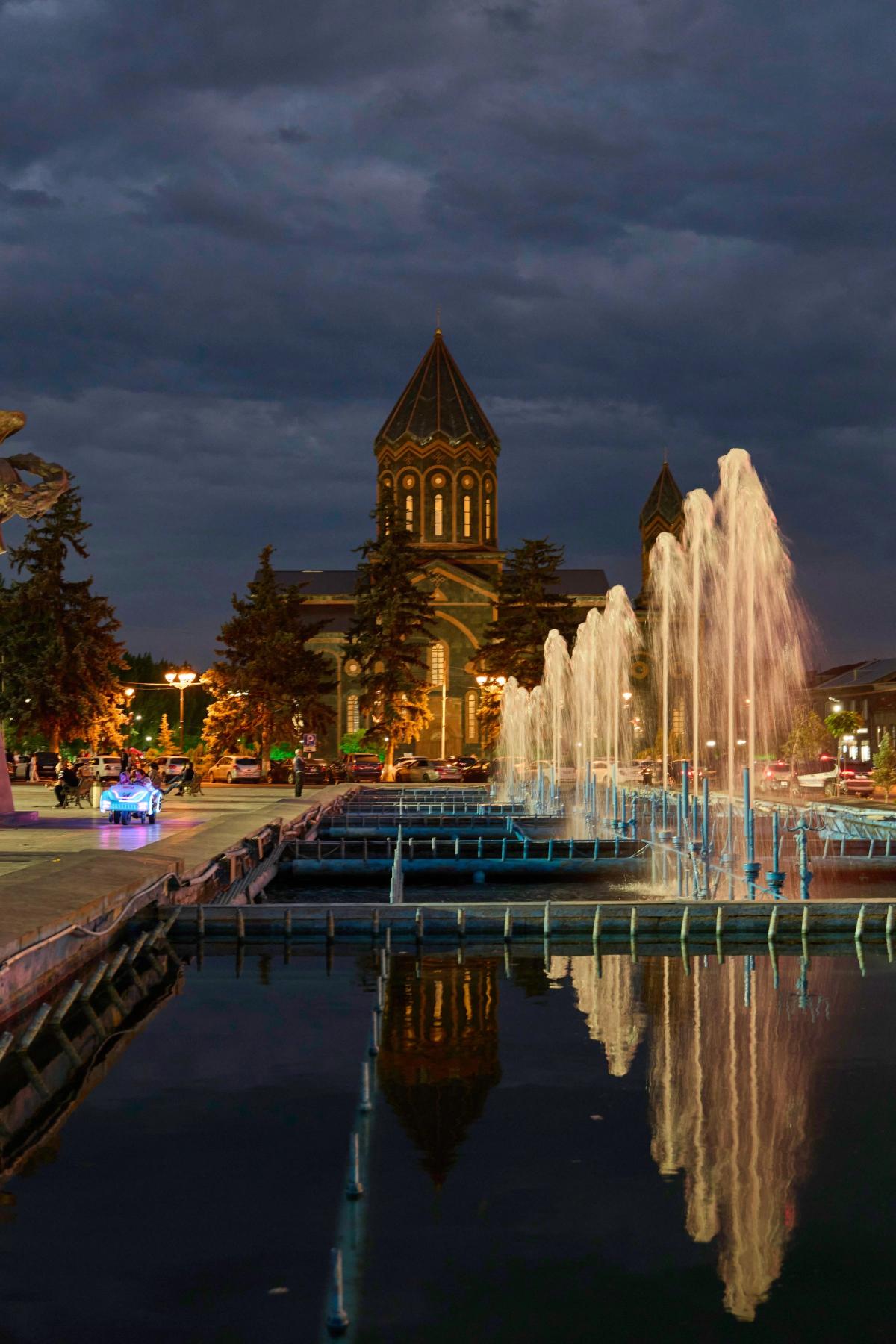
Gyumri is Armenia's second city, and it feels nothing like Yerevan. Streets of dark and rose tuff stone, carved balconies and merchant houses give it a calm, old-world mood, and its people are known across the country for their wit and their love of music, theatre and craft.
The historic Kumayri district has more than a thousand 19th-century buildings, many now museums, galleries and cafes. Add the Black Fortress, a lively pedestrian street and some of Armenia's best-loved home cooking, and Gyumri makes a rewarding stop on the way to the north or the Georgian border.
Armenia's great monuments, museums and towns in one week, at an easy pace and in any season.
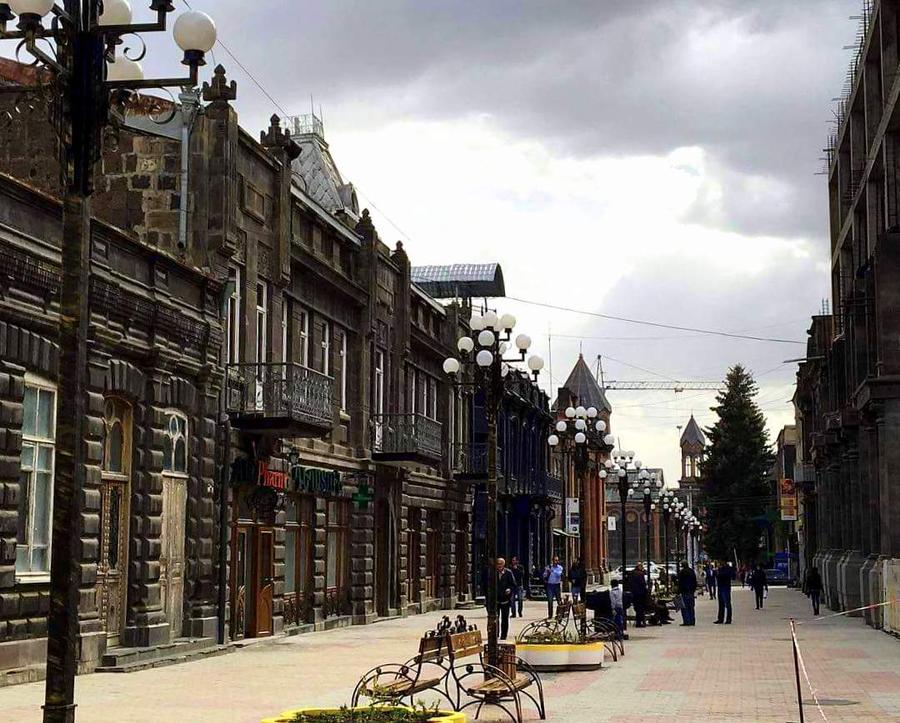
Kumayri is the old quarter of Gyumri, with more than a thousand 19th-century buildings in black, red and pink tuff, a volcanic stone. Merchant houses have carved balconies, arched courtyards and fine stone details, and many have been restored as museums, workshops, galleries and guesthouses. It is the best place in Armenia to walk through a historic Russian-era city centre.
The main square of Gyumri is named after Vardan Mamikonian, the Armenian hero. A bronze statue stands in the middle, and the square is ringed by cafes, the Church of the Holy Mother of God, known as Yot Verk or Seven Wounds, and the Church of the Holy Saviour. It is the best place to start a walk and to watch city life.
On the western edge of the city, Sev Berd is a massive round fortress of black stone built in the 1830s by order of Tsar Nicholas I. Today it hosts a museum about the Russian period of the city, and its courtyard is used for concerts, festivals and weddings. The walls give wide views over the city and the plain.
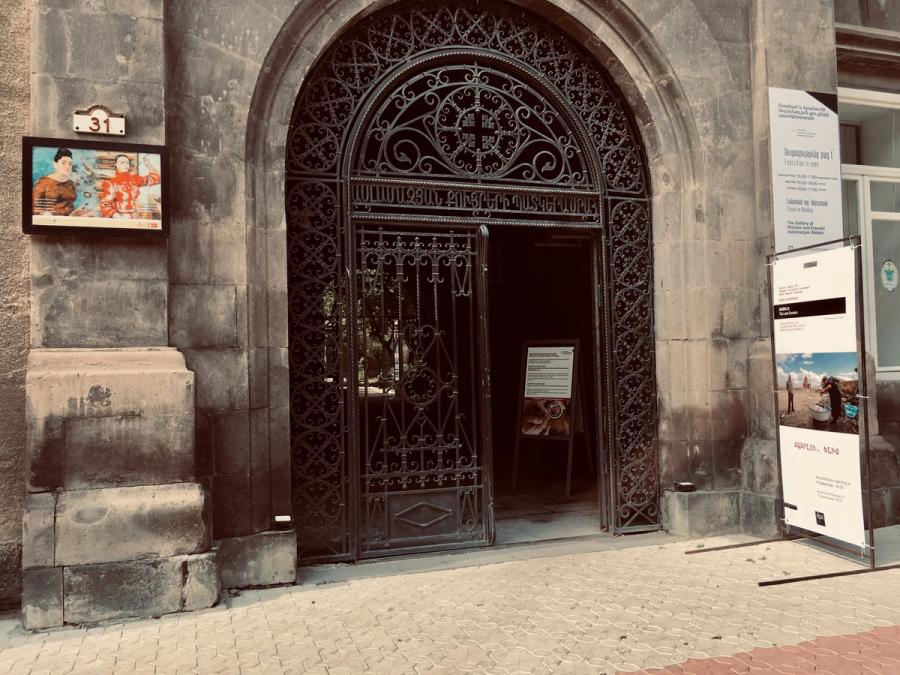
Gyumri has a remarkable number of small museums for a city of its size. The Dzitoghtsyan Museum of National Architecture and Urban Life shows how a 19th-century merchant family lived, the Aslamazyan Sisters' House-Museum shows the work of two painters, and the museum of the comic actor Frunzik Mkrtchyan celebrates a local favourite. The Cobweb Art Gallery and several craft workshops show contemporary art.
Ryzhkov is the main pedestrian street, a short walk from Vardanants Square, lined with cafes, galleries and small shops. In summer, tables spill out onto the pavement and street musicians play in the evening. It is a pleasant place for coffee, dessert and people-watching.
Photos: Preacher lad, CC BY-SA 4.0 · AnnHairapetian, CC BY-SA 4.0
Gyumri has had many names. The ancient settlement of Kumayri appears in Urartian inscriptions, and the town grew up on the trade routes between Armenia, Georgia and Anatolia. In 1837, after the Russian Empire took the region, it was renamed Alexandropol in honour of the empress, and the Black Fortress was built to guard the border.
In the 19th century Alexandropol became one of the great cities of the Caucasus, with a lively merchant class, theatres, schools and a famous tradition of craftsmen and artists. It became Leninakan in the Soviet period, and Gyumri in 1990. Today it is Armenia's cultural capital and a city of festivals, humour and craft.
| When | What happened |
|---|---|
| Urartian period | Kumayri appears in inscriptions |
| 1837 | The town is renamed Alexandropol; the Black Fortress is built |
| 19th c. | Alexandropol grows into a merchant and cultural centre of the Caucasus |
| 1924 | The city is renamed Leninakan |
| 1990 | The name Gyumri is restored |
Gyumri sits on a high basalt plateau in northern Armenia, surrounded by volcanic hills and open farmland.
Fresh green plateau, mild days and quiet streets.
Good for walking the old quarter
Warm days, outdoor cafes and festivals. Evenings are cool.
Best for festivals and street life
Clear light on the stone buildings and comfortable temperatures.
Best for photography and museums
Snow on the black tuff and warm, cosy cafes. Museums and restaurants are open.
For atmosphere and warm food
The historic centre is compact and walkable. For Marmashen, Harichavank and Lake Arpi, a taxi or a driver is the easiest way. Local taxis are cheap and easy to find.
Stay in the Kumayri district for boutique guesthouses in restored merchant houses, or near Vardanants Square for hotels and cafes. Summer festival weekends fill up, so book ahead.
Gyumri is proud of its home cooking. Try khash on a winter morning, tolma, kyufta and pilaf, local chanakh cheese and sweet pastries. Cafes on Ryzhkov street and around Vardanants Square serve coffee and dessert, and small restaurants in the old quarter cook traditional dishes.
Drive or take the express train in the morning, walk the Kumayri district, lunch on Ryzhkov street, visit the Black Fortress and return in the evening.
Spend the first day in the old quarter and the museums, and the second at Marmashen Monastery and Harichavank.
Include Gyumri in a week-long journey through culture, monasteries and mountains.
About 120 km, roughly 2 hours by car or 3 hours by train.
It has a rich tradition of art, theatre, music, humour and craft, and a historic quarter of more than a thousand 19th-century buildings.
Black-tuff architecture, the Kumayri district, the Black Fortress and the famous humour of its people.
One day covers the old quarter, the main square, the fortress and a museum. Stay two days to add monasteries and Lake Arpi.
It was renamed in 1837 in honour of the Russian empress Alexandra Feodorovna, after the Russian Empire took the region.
Yes. Trains run daily, and an express on Fridays to Sundays is faster.
Get seasonal tips, new routes and ideas for your next trip to Armenia.
Thank you. We will be in touch soon.
