A Cultural Week in Armenia
Armenia's great monuments, museums and towns in one week, at an easy pace and in any season.
- 7 days
- Easy
- All year
Price on request
View tour
A ruined 9th-century basalt church on a hill above the Argichi river, once capital of the region of Kot.
Written by Wild Armenia guides · Last verified 2026-11-03
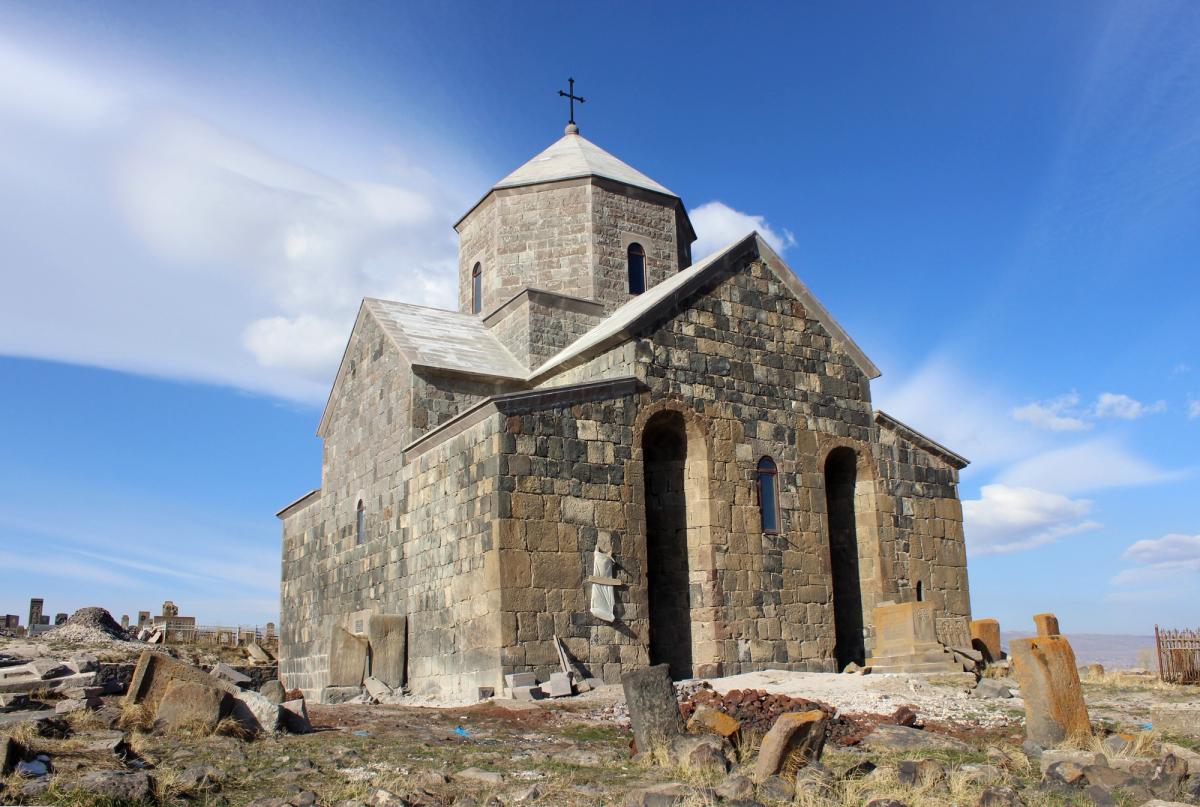
Kotavank is on a hill above the Argichi river and the village of Nerkin Getashen, south of Lake Sevan. It was built in the 9th century by Prince Grigor Supan, son of Princess Mariam, and served as the capital of the early medieval region of Kot. The church is in ruins: its roof, drum and dome have collapsed.
It has a domed cruciform plan of rough basalt, with four prayer rooms and hidden chambers above, and two tunnels, one to a spring and one as an escape route. A large medieval cemetery with khachkars lies around it.
Armenia's great monuments, museums and towns in one week, at an easy pace and in any season.
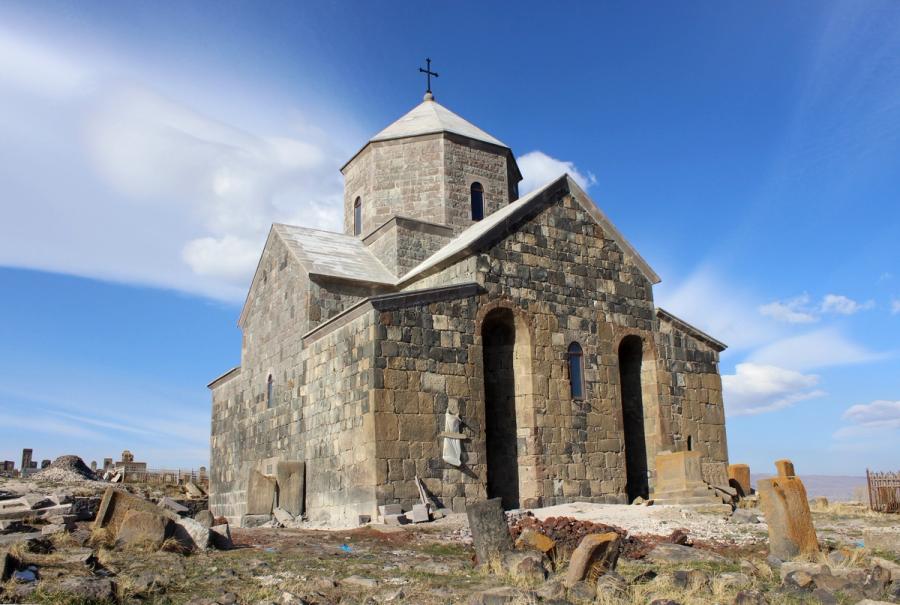
The basalt walls and apse, with khachkars around.
Photos: Travis K. Witt, CC BY-SA 4.0
Built in the 9th century, partly destroyed in the 10th-11th centuries and by an earthquake; renovation began around 2014.
Green hills and mild days.
Good for visiting
Long days and bright light.
Best overall
Golden light and clear air.
Good for photography
Cold; snow is possible.
For quiet visits
Prince Grigor Supan, in the 9th century.
Get seasonal tips, new routes and ideas for your next trip to Armenia.
Thank you. We will be in touch soon.