
A Cultural Week in Armenia
Armenia's great monuments, museums and towns in one week, at an easy pace and in any season.
- 7 days
- Easy
- All year
Price on request
View tour
A first-century temple above a basalt gorge, 30 minutes from Yerevan.
Written by Wild Armenia guides · Last verified 2026-11-03
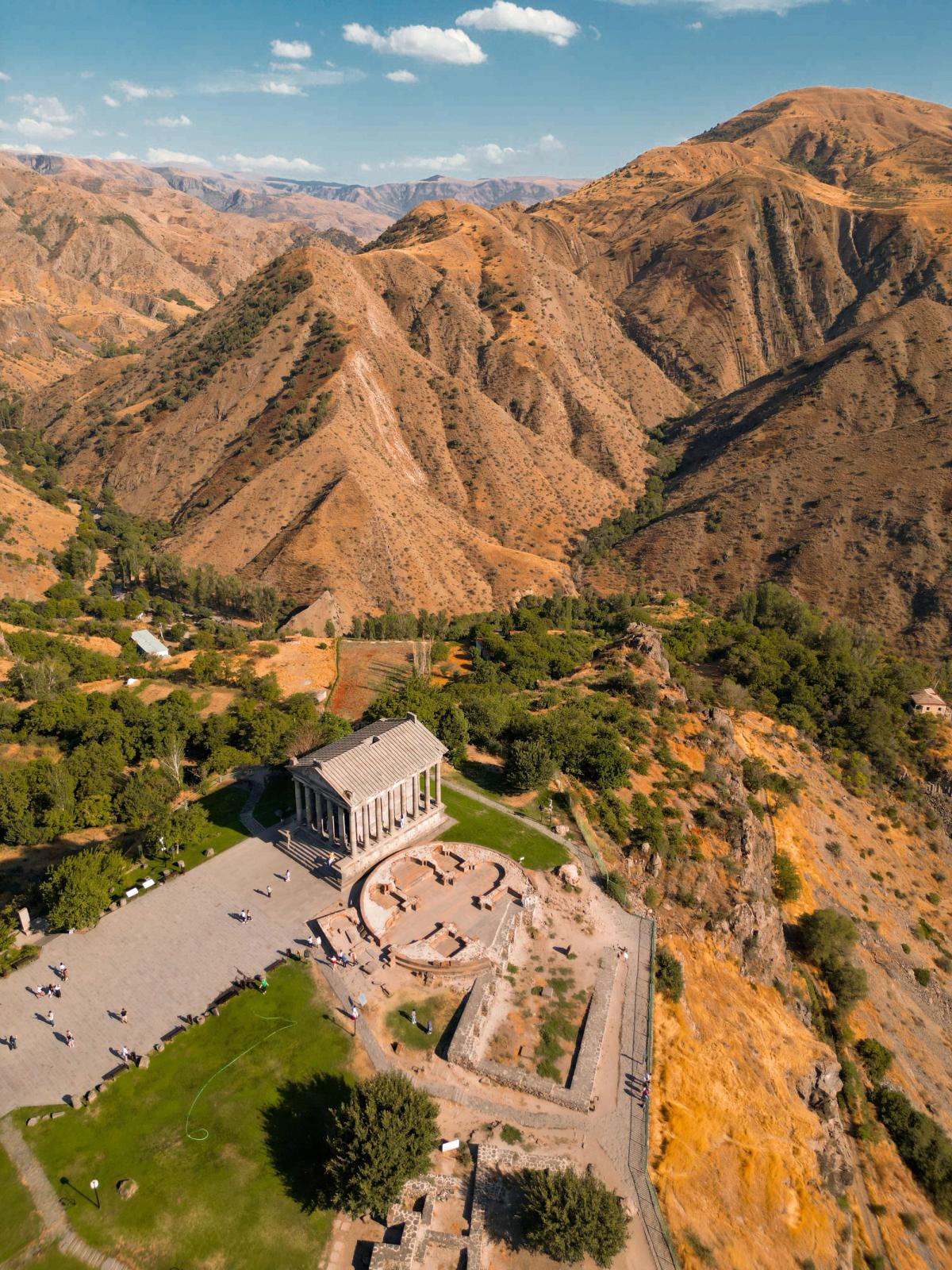
Garni is the one place in Armenia where you can stand inside a classical temple. Its Ionic columns rise from a cliff above the Azat river, with the gorge falling away below and the mountains of Kotayk behind. The temple was built in the first century, long before Armenia became Christian, and was carefully rebuilt in the twentieth.
Below it, the Azat has cut a gorge lined with tall basalt columns, known as the Symphony of the Stones. Garni and the monastery of Geghard are only a few minutes apart, so the two make one of the easiest and best day trips from Yerevan.
Armenia's great monuments, museums and towns in one week, at an easy pace and in any season.
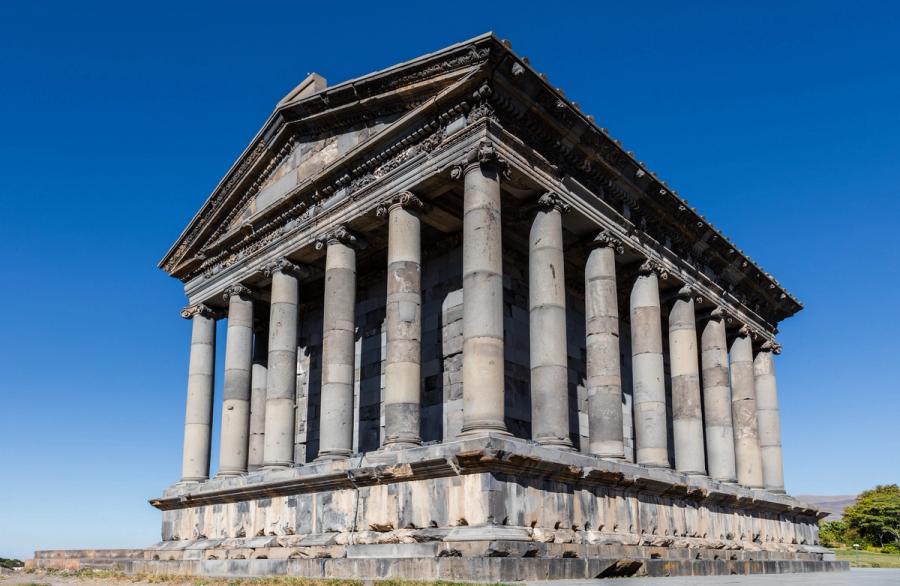
A small Ionic temple of dark basalt, raised on a podium and approached by a flight of steps. It is usually dated to the first century and attributed to King Tiridates I, and it is thought to have been dedicated to a pagan god, probably the sun god Mihr. An earthquake brought it down in 1679, and in the 1960s and 1970s it was put back together from the original blocks. Look closely at the carved acanthus leaves and the lions' heads along the roof.
Beside the temple, under a protective roof, lie the remains of a small bath house from the 3rd century with a mosaic floor made of coloured pebbles. The mosaic shows scenes from Greek myth, and the rooms show how the royal household once heated and washed. It is a short stop, but rare in Armenia.
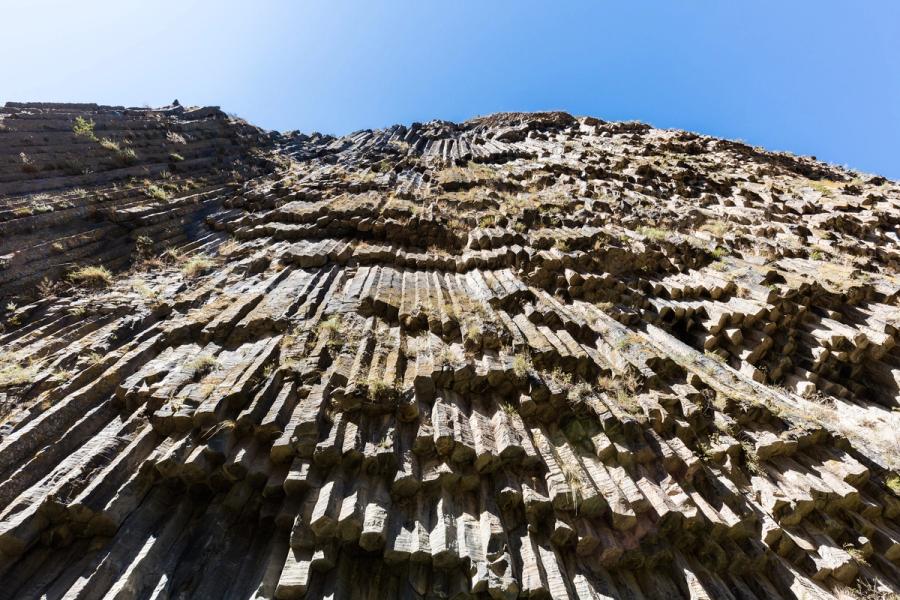
A few minutes down the gorge, the Garni river wall is made of tall hexagonal basalt columns that look like the pipes of an organ. The columns formed when lava cooled slowly. You can see them from the road and a short path at the bottom of the gorge, and there is a good viewpoint on the way down from the temple.
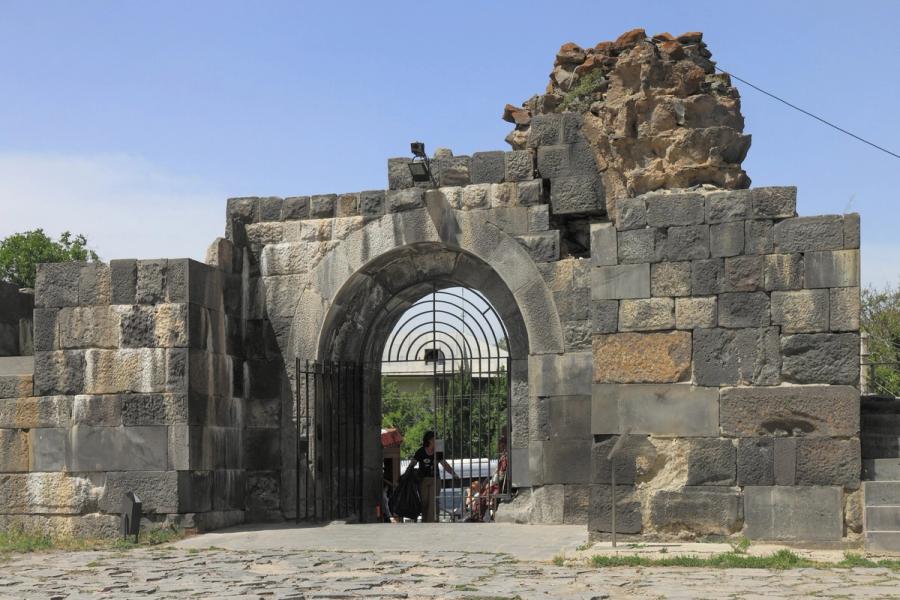
The temple stands inside the walls of a royal fortress, whose towers and gate sit on a triangular cape between two ravines. Today you can walk along parts of the walls, then look around the village for fresh lavash baked in a tonir and for small family kitchens that serve lunch.
Photos: Diego Delso, CC BY-SA 4.0 · Marcin Konsek, CC BY-SA 4.0
People have lived on this cape since the Bronze Age. In the first century, the fortress became a summer residence of the Armenian kings, and the temple was built in its walls. After Armenia adopted Christianity in 301 the temple was spared, probably because it was used as a royal summer house, and the fortress stayed in use for centuries. The 1679 earthquake shattered it, and its blocks lay on the slope until the Armenian architect Alexander Sahinyan rebuilt it between the 1960s and 1976.
| When | What happened |
|---|---|
| Bronze Age | The cape is settled and fortified |
| 1st century | The temple is built, usually attributed to Tiridates I |
| 1679 | An earthquake destroys the temple |
| 1960s to 1976 | The temple is rebuilt from its original blocks |
Garni sits on a plateau above the Azat gorge, a land of dry meadows, orchards and basalt cliffs. Spring brings wildflowers on the slopes and cherry and apricot blossom in the village, and the gorge below is cool in summer.
Green slopes, blossom and full rivers.
Good for walks and photography
Hot on the plateau, cool in the gorge; come early.
Best for the gorge
Golden light, fruit in the orchards and pleasant temperatures.
Best overall
Snow on the hills and few visitors; the temple stays open.
For quiet visits
The temple, the village and the gorge viewpoint are close together on foot. The Symphony of the Stones is a short drive or a pleasant walk down the road.
Most visitors stay in Yerevan and make Garni a day trip. A few guesthouses in the village offer a quieter night with views of the gorge.
Several family kitchens in Garni serve lunch with fresh lavash baked in a tonir, grilled meat, local cheese and herbs. Try the sweet fruit lavash in the village stalls.
Garni temple in the morning, the Symphony of the Stones, then Geghard monastery and lunch in the village.
Include Garni in a seven-day route through the monasteries, cities and villages of Armenia.
About 30 km, roughly 40 minutes by car.
It is usually dated to the first century and attributed to King Tiridates I.
It was rebuilt in the 1960s and 1970s from the original blocks, after an earthquake destroyed it in 1679.
A wall of tall hexagonal basalt columns in the Garni gorge, formed by cooling lava.
Yes. They are a few minutes apart, and half a day is enough for both.
Get seasonal tips, new routes and ideas for your next trip to Armenia.
Thank you. We will be in touch soon.

