
Hike Mount Artanish above Lake Sevan
A peninsula summit with Lake Sevan on both sides, and a swim at the end in warm months.
- 1 day
- Moderate · 10 km · 550 m ascent
- September to May
From115,000 AMDper group · 1–2 people
View tour
The largest lake in Armenia, high in the mountains, with medieval monasteries on its shore.
Written by Wild Armenia guides · Last verified 2026-11-02
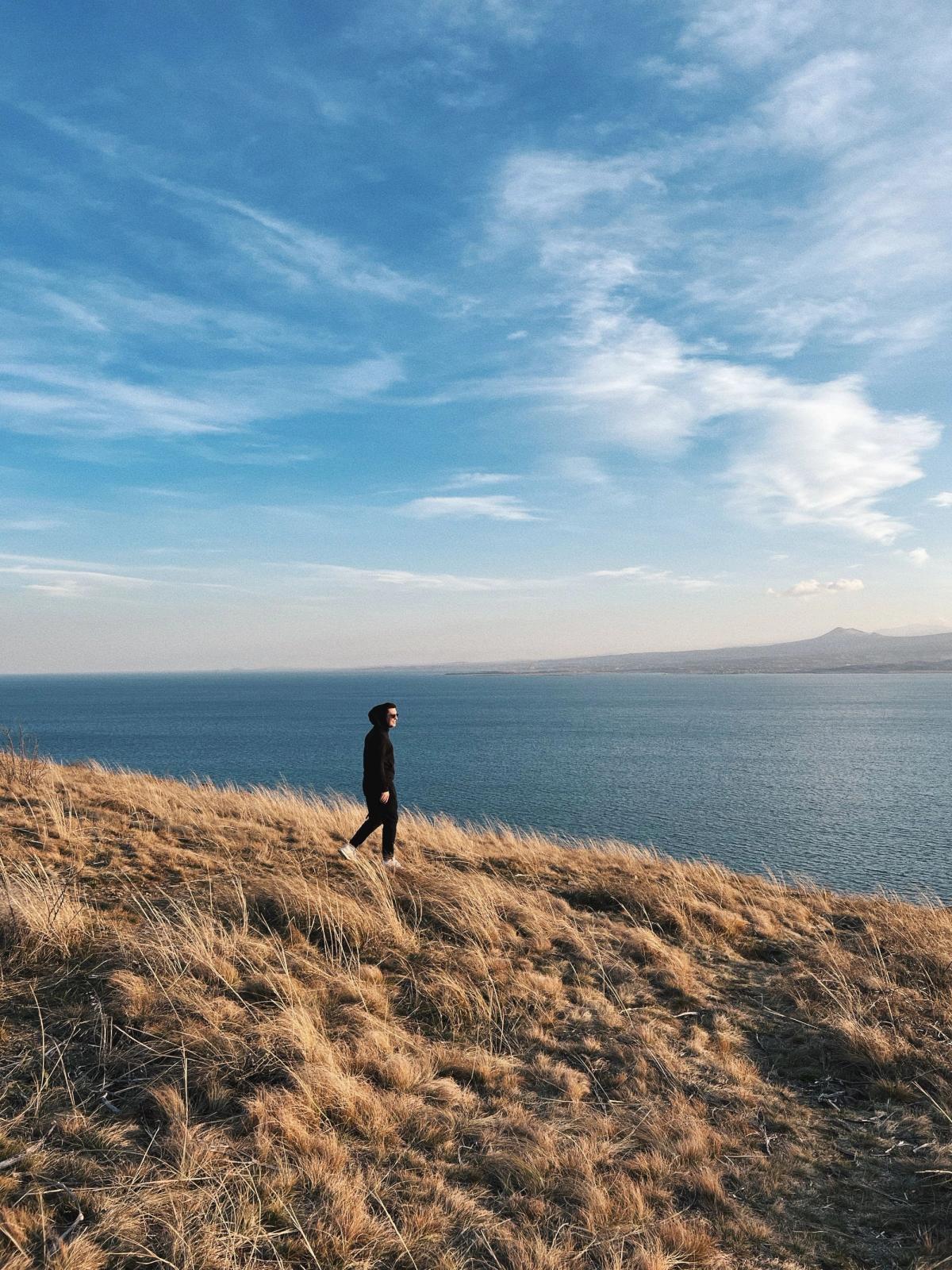
Lake Sevan is the place most Armenians mean when they say "the sea". At 1,900 m, summer days by the water stay fresh and cool. You can see a 9th-century monastery, the largest surviving field of carved cross-stones and a quiet beach in one day, then climb into the Geghama volcanoes behind the shore.
A peninsula summit with Lake Sevan on both sides, and a swim at the end in warm months.
A ride along the shore of Lake Sevan, then a cooking class and dinner in Dilijan.
A week in the saddle across high pastures south of Lake Sevan, with nights in camp.
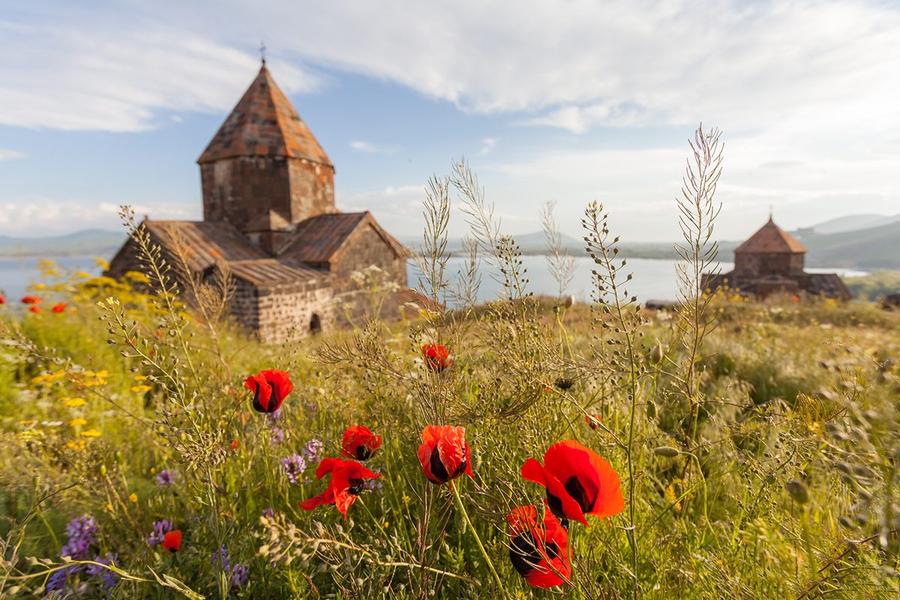
Two dark basalt churches on the hill of the Sevan peninsula, both built in 874 by Princess Mariam, daughter of King Ashot I Bagratuni. Until the 1950s this was an island fortress where Armenian kings and princes took refuge during the Arab invasions. In the 1950s the lake level dropped and the island joined the shore as a peninsula. A theological academy still works on the peninsula.
More than 400 carved cross-stones and tombstones from the 9th to the 18th century, most of them from the 13th to 17th, cover about a hectare at the edge of Noratus village. It is the largest surviving field of khachkars. Look for the stones with feasting and craft scenes, and for the signatures of master carvers.
A small 9th to 12th-century monastery on a cliff right above the water on the west shore. Inside the dark porch stand the church of St Stephen and a 10th-century chapel. It sees far fewer visitors than Sevanavank.
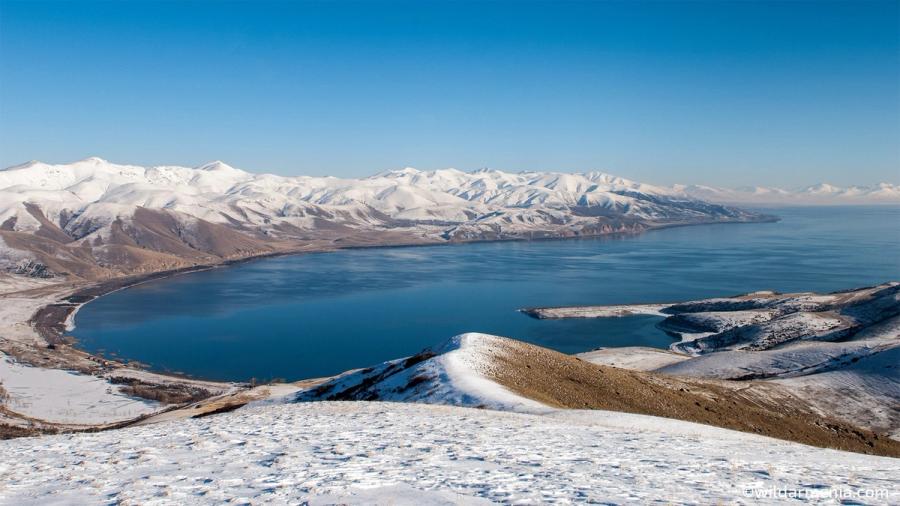
The wild, almost empty peninsula on the north-east shore, with juniper slopes above the water. Our Artanish hike climbs its ridge for views over the whole lake.
People have lived around the lake since the Bronze Age, when the Cyclopean fortresses of Lchashen were built. In the Middle Ages Sevan was a frontier: the island monastery served as a royal refuge and a fortress against Arab raids, and in 921 King Ashot II fought from the island against the Arab general Beshir. The khachkars of Noratus record five centuries of village life on the west shore.
The 20th century changed the lake itself. From 1933 Soviet engineers deepened the Hrazdan River outlet and cut a tunnel below the waterline to feed hydropower plants and irrigation. The lake fell more than a metre a year, about 19 m in total by the mid-1990s, and the island became a peninsula. A 50 km tunnel from the Arpa River, finished in 1981, began to bring water back. Since 2001 the level has risen by more than 4 m.
| When | What happened |
|---|---|
| 874 | Princess Mariam builds the two churches of Sevanavank |
| 921 | Ashot II fights from the island against Beshir |
| 13th to 17th c. | Most of the Noratus khachkars are carved |
| 1933 | The Soviet drawdown of the lake begins |
| 1950s | Sevanavank island joins the shore as a peninsula |
| 1978 | Sevan National Park is created |
| 1981 | Arpa–Sevan tunnel completed |
| 2001 on | Water level rises again, more than 4 m since |
Sevan is a high mountain lake of about 1,240 km², up to about 79 m deep. Twenty-eight rivers and streams flow in; only the Hrazdan flows out, and most of the water leaves by evaporation. The lake gives Armenia most of its fish and crayfish catch.
Hills turn green and flowers bloom, and the shores are quiet.
Good for monasteries and quiet walks
Warm days, windy afternoons and cool water; beaches and fish restaurants are open, and the summer train runs on weekends.
Best for swimming, cycling and hiking
Fewer people, golden hills and cool evenings.
Best for hiking and photography
Snow on the shores and passes and a cold wind; monasteries are open, beaches are closed.
For snowy views and winter hikes
The sights are spread along the shore, so a car or driver is the easiest way. Taxis work between Sevan town and the beaches. Artanish and the east shore are hard to reach without a car.
Base in Sevan town or on the north-west shore for the beaches and Sevanavank, or on the north-east shore for the quiet side and Artanish. Choose between lakeside hotels, guesthouses and summer camping.
The lake is known for its fish. Try grilled or fried whitefish and boiled crayfish at lakeside restaurants and from roadside sellers on the west shore. Ishkhan trout is under threat, so ask before ordering it.
Sevanavank in the morning, a lunch of fish on the west shore, then Hayravank and the Noratus khachkars in the afternoon, back in Yerevan by evening.
Day one on the north shore and Sevanavank; day two on the Artanish peninsula, hiking and swimming; day three on the west shore at Noratus and Hayravank, then over the Geghama mountains or on to Dilijan.
About 62 km to Sevan town, under an hour by car or 1 to 1.5 hours by minibus.
Yes, from about July to August, when the water is warm enough for most people. It stays cool because the lake sits at 1,900 m.
It was until the 1950s. When the lake level dropped, the island joined the shore and became a peninsula.
One day covers Sevanavank, Hayravank and Noratus. Stay two or three days to hike Artanish and see the quieter east shore.
Yes, in summer, on Fridays to Sundays from mid-June to late September.
Grilled whitefish and crayfish. The native ishkhan trout is under threat, so ask before ordering it.
Get seasonal tips, new routes and ideas for your next trip to Armenia.
Thank you. We will be in touch soon.


